.svg)


Hit Enter to Search or X to close
What’s Wrong with Uber Eats?
Huge commissions, differences between delivery prices and restaurant prices, and a growing mutual dependence – today’s long read looks at food delivery aggregators through the example of Uber Eats.
What’s Wrong with Uber Eats?
Do you know what commission Uber Eats charges restaurants for its services? The correct answer is around 30–33% of the order value when the delivery is handled by an Uber Eats courier.
So when I saw a wonderful piece of “social advertising” for Uber Eats on the streets of Warsaw, saying that they help thousands of restaurant owners generate revenue (and, of course, featuring a smiling immigrant working in a kitchen), I decided to dedicate a separate piece to food delivery aggregators. Naturally, using Uber Eats as the example.
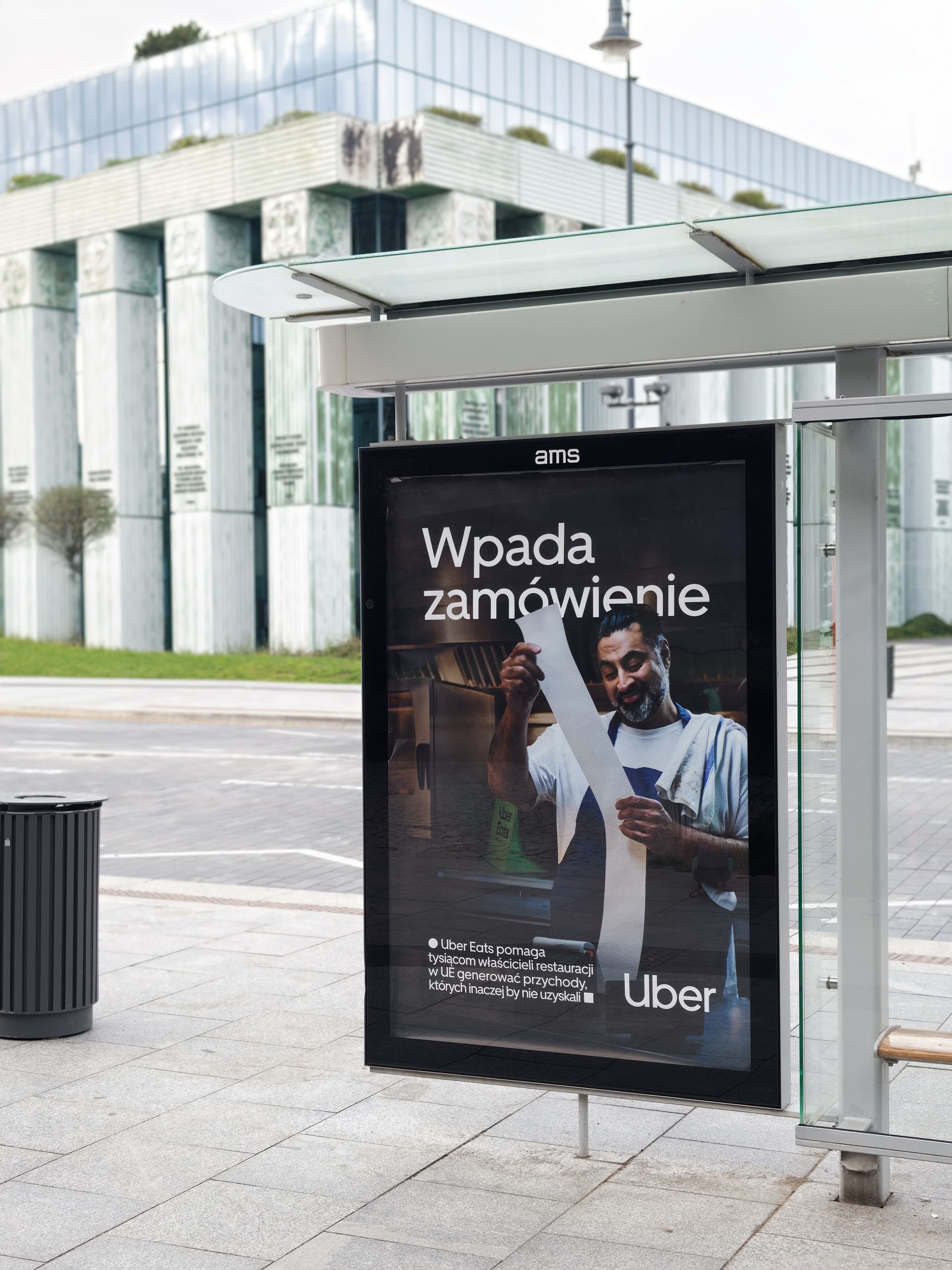
From the perspective of an ordinary user, Uber Eats looks like an almost perfect service. A familiar app, a choice of restaurant, an “order” button – and half an hour later, your food is at the door. But behind this convenience lies an extremely complicated (and highly contradictory) economic model.
A model that, in the case of Uber Eats, is criticised by almost everyone involved in the “food chain”.
Restaurants complain about excessively high commissions, couriers often consider their earnings insufficient, customers regularly face constantly rising prices and additional fees, while Uber Eats and other major platforms themselves also operated for many years without sustainable profits.
The answer to the question of why the hell this model continues to exist despite all of this is what we’ll try to find today.
How the Model Works
Uber Eats sells not only food, but also access to an audience. A restaurant gets:
a place in the app;
a flow of new customers;
order processing;
a payment system;
marketing;
delivery.
In return, the restaurant pays a commission which, depending on the terms of cooperation, can reach around 30% of the order value.
There are also different pricing plans: a higher commission will usually give a restaurant better placement in search results, additional advertising opportunities, or more favourable delivery terms for the customer. Marketing matters too.

The Main Problem for Restaurants
For someone far removed from the hospitality industry, 30% may look like a high but still more or less reasonable intermediary fee.
But the restaurant business works completely differently. When you have to account for the cost of ingredients, payroll, rent, utilities, taxes, equipment depreciation, and another dozen variables, it can easily happen that the platform’s commission ends up being higher than the restaurant’s entire profit on an order. And that’s not cool.
This is precisely why restaurant owners often say that they don’t make money on delivery – they simply maintain turnover.
A Warsaw restaurant owner whose establishments are listed on Uber Eats, speaking anonymously, shares their experience of working with the aggregator with Black Guide:
“We don’t have our own couriers, so the percentage Uber takes is 30–33%. That’s a lot. I think that when aggregators first appeared, they were all competing with each other for customers, but later they simply realised that they could all raise their rates together and keep them at that level.”
And this is where we get to the main question: if delivery is so unprofitable for restaurants, why do they continue using Uber Eats?
Because when choosing between having no demand at all and having low margins, restaurant owners usually choose the second option. Basically, there are exactly two choices: connect to the platform and receive low-margin orders, or opt out and lose those customers altogether.

The business gradually adapts to delivery orders, comes up with new promotions and dishes with a lower food cost, gains new guests and new orders – and eventually, giving all of that up becomes practically impossible.
And if you’re a restaurant that doesn’t operate as a “dark kitchen”, this is a hell of a problem.
Because the average check is formed very differently in a restaurant and through delivery.
Additional orders, drinks, the opportunity to offer a dessert – all of that goes out the window with delivery. Instead, you get the costs of packaging, disposable cutlery, bags, and so on. Plus, instead of the tips waiters would have received while serving a table, they get extra work in the form of putting orders together.
How can a restaurant turn this to its advantage? Very easily – it can simply raise its prices. I’m sure you’ve noticed that dishes and drinks cost more in the app than they do in the restaurant itself.
Now you know why this happens – the restaurant is simply trying to compensate for its own costs and the commission charged by Uber Eats.

A Warsaw restaurant owner whose establishments are listed on Uber Eats, speaking anonymously, shares their experience of working with the aggregator with Black Guide:
“Restaurants, in turn, have started using all aggregators as separate sales channels – creating special products for them, sets, 1+1 offers, different portion sizes for classic dishes, and, of course, different prices in which these margins are hidden.”
Why can’t the platform simply lower its commission? Uber Eats has a very simple answer to that: no.
Someone has to pay for the courier, logistics, app support, development, marketing, payment processing, insurance, customer support, and so on.
And this creates yet another paradox: the real cost of delivery is significantly higher than what “Uber” customers have become accustomed to.
It’s just that, initially, Uber and other services covered some of these costs through huge investment injections, effectively subsidising delivery prices in order to grow the market. And now, when the model works almost perfectly, they want to get all that investment back.
An equally absurd situation arises when it comes to promoting restaurants within the app. Theoretically, this is also quite simple: there are restaurants willing to pay a higher commission to appear higher up in the search results.
Uber is, of course, interested in this too. Looking at each individual agreement, everything seems fine.
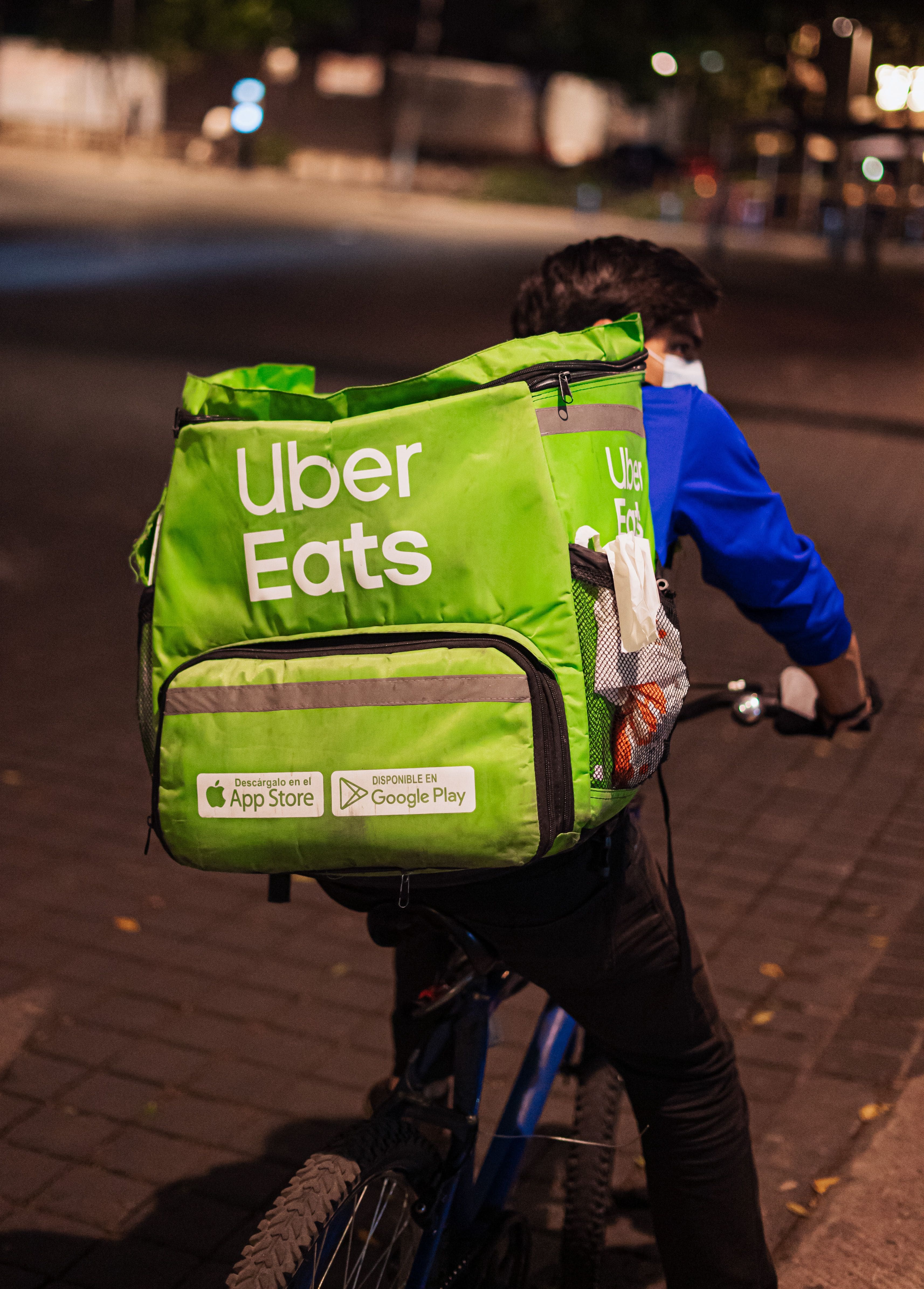
But from the perspective of the platform’s overall approach, this is what happens: lesser-known restaurants located far from the city centre are massively promoted – the couriers have the furthest to travel to reach them, while servicing those restaurants ends up costing Uber Eats a fortune.
A Warsaw restaurant owner whose establishments are listed on Uber Eats, speaking anonymously, shares their experience of working with the aggregator with Black Guide:
“Specifically with Uber, it’s harder for us to work because getting in touch with someone who can solve your problems, like changing the restaurant’s cover photo, sometimes borders on a miracle.
But it is a sales channel – there are also steady orders from them (more than from other aggregators), so dostosowujemy się i lecimy dalej.”
And finally, the funniest thing: lately, it’s specifically on Uber Eats, rather than Google, that a fairly large share of customers have started choosing their restaurants.
Giving up Uber Eats means losing not only delivery orders, but also visibility. And, as a result, potential customers in the restaurant itself.
The relationship between restaurants and delivery aggregators in general turns out to be pretty toxic – with dependency, Stockholm syndrome, and, most importantly, that 30% commission. The commission that “helps thousands of restaurant owners generate revenue” together with Uber Eats.

.svg)


.jpg)




Get weekly updates
*We’ll never share your details.
Follow us — @biteme.warsaw

.jpg)
.jpg)
.jpg)
.jpg)
.svg)

Join Our Newsletter
Get a weekly selection of curated articles from our editorial team.